1) Training Foundations
Build a simple, repeatable week. Most successful marathon plans centre on:
- 1 long run,
- 1–2 quality sessions (e.g., tempo/threshold, marathon‑pace, or intervals),
- the rest easy‑effort aerobic running, plus 2–3 short strength/mobility blocks.
Long runs (how long is long enough?): Many plans peak around ~29–35 km (18–22 miles), often avoiding much beyond ~3 hours due to diminishing returns and rising injury risk.
Taper (arrive fresh, not flat): A well‑supported approach is a ~2‑week taper that trims volume ~41–60% while maintaining intensity and frequency.
Strength & mobility (injury insurance): Programmes including strength and proprioception reduce risk; stretching alone isn’t protective.
2) Pacing That Works (for different goals)
What the data says: Even pacing or a slight negative split tends to produce better outcomes for most runners; big positive splits often lead to late fade.
First‑timer approach
- Target an even or conservative first half (~1–3% slower than goal average pace).
- Set effort caps early (RPE/HR) so crowd energy doesn’t pull you off plan.
Seasoned/PB‑chaser approach
- Choose even or controlled negative split (1–3%).
- Anchor to marathon‑pace work; avoid “banking time” early—this often backfires around 30–35 km.
Course matters: Adjust for hills, wind, bridges, camber and crowd density; keep effort steady over terrain rather than pace at all costs.
3) Fueling the Marathon Engine
Carbohydrates during the race
- For events >2–3 hours, target ~60–90 g carbs/hour using glucose + fructose (multiple transportable carbs).
- Shorter or lower‑intensity efforts: 30–60 g/h; practise exactly what you’ll use.
Train your gut (so race‑day feels normal)
- Rehearse fueling weekly and progress toward your target intake (e.g., 60→90 g/h over weeks).
Caffeine (optional)
- ~3–6 mg/kg about 60 minutes pre‑race if tolerated; consider sleep sensitivity.
4) Hydration: Enough, Not Excess
- Drink to thirst and conditions; many land around ~400–800 ml/h, but needs vary widely.
- Practise with your chosen products; adjust electrolytes for heat and sweat rate.
5) Kit & Footcare (small details, big dividends)
Shoes: Use shoes you’ve tested on long runs and marathon‑pace work.
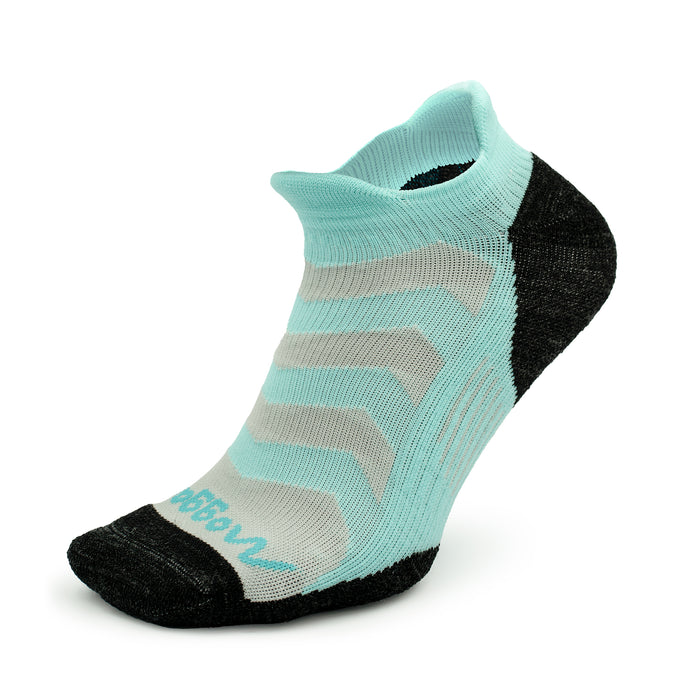
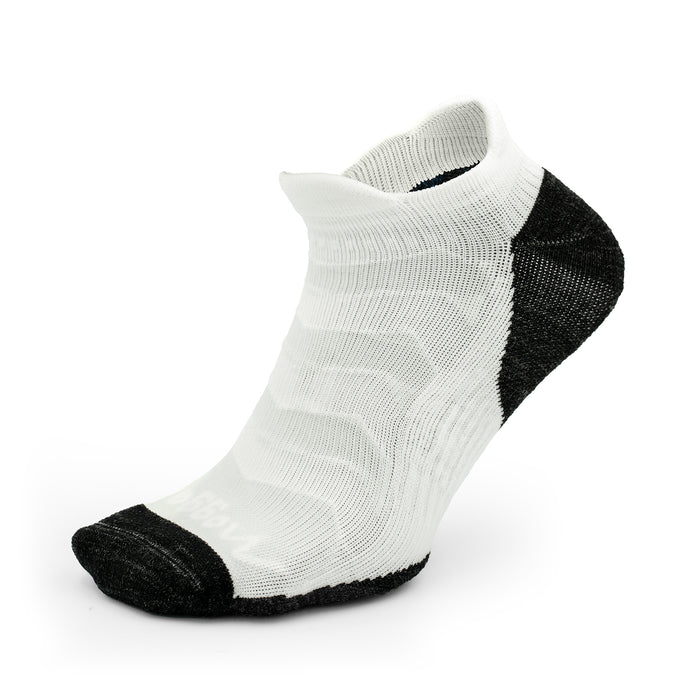
Socks: Choose technical, moisture‑managing socks that stay put.
Moggans picks
- Ultralight Speed — our lightest, most race‑focused feel.
- Ultralight Merino — natural thermoregulation for cooler long runs and long pre‑start waits.
Blister prevention basics
- Keep feet dry where possible; reduce friction (single technical sock or thin liner),
- Pre‑tape hotspots; trim nails.
Race‑day checklist (essentials)
- Shoes (broken‑in), chosen socks, kit, gels/chews, bottles or flasks
- Safety pins/race belt, timing chip, anti‑chafe, cap/visor, layers for start
- Pace band/watch set to lap, transport plan, ID and payment method
6) Race‑Week & Race‑Day Execution
Race week
- Keep intensity but trim volume (taper).
- Prioritise sleep; modest carb‑load with familiar foods.
Morning of
- Breakfast 2–3 h pre‑start; small top‑up if needed; sip to thirst.
- Light warm‑up; save the work for the course.
During
- Settle early (first 5–10 km), then hold rhythm.
- Fuel from the first 30–45 minutes; sip to thirst; adjust for heat/wind.
When things wobble
- GI upset: back off, small sips, lower concentration until calm.
- Cramps/fatigue: check pace and fueling; brief walk‑break to reset.
7) Thinking about London or Boston?
Boston: Control early downhills; be ready for Newton/Heartbreak; plan for a late start and longer pre‑start window. Read the Boston mini‑guide →
London: Fast and flat(ish); early congestion and landmarks can pull you faster—rhythm over bravado. Read the London mini‑guide →
8) Sample Week Templates (adapt to your level)
First‑timer (peak ~55–65 km / 34–40 mi)
- Mon: Rest or 30–40 min easy + short mobility
- Tue: Tempo/threshold (e.g., 3 × 8–10 min @ comfortably hard)
- Wed: Easy 45–60 min
- Thu: Marathon‑pace segments (e.g., 2 × 5 km @ MP with 1 km easy)
- Fri: Easy 30–45 min + light strength
- Sat: Easy 40–60 min
- Sun: Long run building to 28–32 km with last 6–10 km steady
Veteran/PB chaser (peak ~80–100 km / 50–62 mi)
- Mon: Easy 50–60 min + strength
- Tue: Threshold work (e.g., 4–5 × 2 km @ LT)
- Wed: Medium‑long 90–110 min easy
- Thu: Marathon‑pace session (e.g., 12–16 km continuous @ MP)
- Fri: Easy 45–60 min + drills/strides
- Sat: Easy 50–60 min
- Sun: Long run 30–36 km with blocks @ MP
Test socks on key days. For race‑pace blocks and long runs, choose a lightweight, breathable sock with a secure heel (e.g., Moggans Ultralight Speed for race‑like feel; Ultralight Merino for cooler or longer runs).
Sources & Further Reading
- Nutrition & fueling: ACSM/AND/DC guidance; Jeukendrup on multiple transportable carbs.
- Hydration: IMMDA/AIMS recommendations—drink to thirst.
- Taper: Bosquet et al.—~2‑week exponential volume reduction with intensity maintained.
- Pacing: Large‑dataset analyses supporting even/negative splits.
- Injury prevention: Strength/proprioception helpful; stretching alone not protective.
- Socks & blisters: Technical fibres outperform cotton; AAPSM overview.
- Caffeine: ISSN position stand—3–6 mg/kg ~60 min pre‑race if tolerated.